Things to Do in Brazil in September
September weather, activities, events & insider tips
Low Season · Budget Friendly
September Weather in Brazil
Temperature, rainfall and humidity at a glance
80°F (26°C)
High Temp
67°F (19°C)
Low Temp
2.1 inches (53 mm)
Rainfall
66%
Humidity
⚠ Agricultural burning season (queimadas) across the cerrado and Amazon margins peaks in August and September, producing smoke haze that can reduce visibility and degrade air quality in central Brazil, including Brasilia, the Pantanal, and Chapada dos Veadeiros. Check INPE fire maps and CPTEC air-quality bulletins before committing to outdoor itineraries in these regions.
⚠ Late September marks the transition into the wet season across Goias, Minas Gerais, and Mato Grosso. Afternoon thunderstorms arrive suddenly, with lightning, strong winds, and brief but intense downpours that can make exposed ridgeline trails and unpaved roads dangerous. Plan high-altitude hikes for morning departures. Carry rain protection at all times.
⚠ UV index reaches 8 in September, high enough to cause sunburn within 25 minutes of unprotected exposure, at altitude in the cerrado highlands or on water in the Pantanal and Bonito. The dry, clear atmosphere reduces the atmospheric UV filtering that humid summer conditions provide.
Is September Right for You?
Weigh the advantages and considerations before booking
Advantages
- + September marks the dry season's final stretch across Brazil's central plateau, the Pantanal, and the southeast coast. Rain stays low. Skies stay clear. Wildlife crowds shrinking waterholes, making sightings easier than any wet month delivers. Trails in Chapada dos Veadeiros and Chapada Diamantina remain firm. By December, these same paths turn to mud-chutes. Now they are walkable. The Pantanal's jaguars, caimans, and capybaras cluster along remaining river channels in densities you will not match once the rains return.
- + International tourism crashes after July and August. Carnival waits six months away. Rio de Janeiro's Sugarloaf cable car proves the point. January brings forty-minute queues. September loads in under ten. Rooms in Fernando de Noronha and Bonito stay available without the months-ahead scramble peak season demands. Rates sit well below December-February highs.
- + Southern right whales calve along Santa Catarina's coast through September. Praia do Rosa and Imbituba see the most action. This month wins for shore sightings. Mothers with newborns swim close, sometimes within 50 meters (164 feet) of the beach. Skip the boat. Watch from the bluffs above Praia do Rosa instead.
- + September 7 is Independence Day, a genuine national holiday. Parades happen. Free concerts run. Brazilians take the long weekend for domestic travel. Brasilia's Esplanada dos Ministerios hosts the country's largest military-civic parade. Salvador to Porto Alegre stage their own processions. You see Brazil's civic identity here, not just its party face.
Considerations
- − Late September brings the dry-to-wet transition across Minas Gerais and Goias. You will feel it. August's blue afternoons stack cumulus towers by 2 PM. Thunderstorms arrive with almost no warning. They are short and violent, not all-day soakers. Still, they strand hikers on exposed trails. Pantanal dirt roads turn to impassable slicks within minutes.
- − The northeast coast from Recife to Sao Luis lives in a different climate zone. September remains rainy season there. Expect overcast mornings in Recife and Salvador. Intermittent drizzle persists. Seas run rough enough that some Fernando de Noronha boat operators cancel sailings. Center your trip on northeast beaches? October or November plays sharper.
- − Queimadas, the agricultural burns clearing pasture across the cerrado and parts of the Amazon, peak in August and September. Smoke haze cuts visibility in the Pantanal, Chapada dos Veadeiros, even Brasilia on bad days. Charred grass smell hangs from mid-morning onward. Air quality occasionally triggers health advisories. Those dramatic orange-tinged sunsets? Symptom, not feature.
Best Activities in September
Top things to do during your visit
September settles over Brazil like a long exhale. Highs hover around 26 degrees Celsius in Rio de Janeiro and Brasília alike, with nights dipping to a comfortable 19 degrees. Warm enough for open-air dining. Cool enough that the oppressive humidity of January and February feels distant. Rainfall is modest, averaging around 53 millimeters across the month. Showers arrive in short, decisive bursts. They leave the air smelling of wet earth and blooming ipê trees, whose yellow canopies line avenues from Copacabana to the Eixo Monumental. The light in Brazil this time of year has a particular clarity. Mornings break sharp and golden. Sunsets over Guanabara Bay stretch into slow, copper-tinged affairs that linger well past six. What makes September distinct is the sense of transition. The Brazilian spring, primavera, officially begins in the third week. With it comes a perceptible shift in the national mood. Cariocas reclaim the beaches in greater numbers. Outdoor markets extend their hours. The scent of grilled meat from corner churrasco stands thickens the warm afternoon air. Tourist crowds remain thinner than the December-through-Carnival crush. That means shorter queues at major landmarks and more breathing room on trails. For travelers who prefer to experience Brazil without competing for sidewalk space, September has a window where the country feels generous and unhurried. Its rhythms are shaped more by local life than by peak-season performance. The drier conditions also open up hiking routes that become slippery or partially restricted during the wetter months. Trails through the Tijuca Forest and along Rio's granite peaks are at their most accessible, with firm footing and sight lines that stretch for kilometers through clean, rain-washed air. In Brasília, the cerrado landscape begins its slow greening. The monumental architecture of Oscar Niemeyer stands even more starkly against skies that tend toward deep, unbroken blue.

Dona Marta's sunrise, undisturbed Christ the Redeemer and more
otherThis experience begins in the bruised pre-dawn darkness of Rio. You climb to the Dona Marta viewpoint where the city reveals itself in layers. First the scattered lights of Botafogo. Then the silhouette of Sugarloaf emerging from the mist. Finally, as the sun crests the Atlantic, the full sweep of Guanabara Bay flushing pink and gold beneath you. The route continues to Christ the Redeemer before the crowds arrive. The only sounds are wind buffeting the statue's outstretched arms and the distant hum of the city waking below. Standing at the feet of the Redeemer in near-solitude, with the cool morning air carrying the green scent of Atlantic Forest, is an entirely different encounter than the midday crush most visitors endure.
Experiencing Christ the Redeemer in the stillness of early morning, with Rio spread beneath you in the first light, transforms a famous landmark into something intimate and almost sacred.
Insider tip: Wear layers. The temperature at the summit can feel noticeably cooler than sea level in the pre-dawn hours. You'll want to stay long enough to watch the light shift across the bay without shivering.
This month: September's drier conditions and lower humidity improve the chances of a clear sunrise with unobstructed views across Guanabara Bay, compared to the foggier and wetter summer months.

Brasilia City Tour
guided_experienceBrasília exists as a city that was willed into being on red cerrado soil in the late 1950s. A guided tour through its monumental axis remains one of the most architecturally disorienting experiences in South America. You move between Niemeyer's swooping concrete forms. The Cathedral's crown of curved ribs flooding its interior with stained-glass light. The reflective pool outside the Itamaraty Palace where the water lies so still it doubles the building into a perfect geometric mirror. The eerie quiet of the Panteão da Pátria with its rough concrete walls that feel cool and slightly damp to the touch. The city smells of dry grass and sun-warmed pavement. The scale of its open plazas, designed for a nation's ambitions rather than a pedestrian's comfort, makes you feel both small and oddly exhilarated.
No other city on Earth was designed so completely as a single architectural statement. Walking Brasília's monumental core with a knowledgeable guide turns what could feel alienating into a revelation about ideology built in concrete.
Insider tip: Ask your guide to include the interior of the Panteão da Pátria, which many visitors skip. The tiled mural by Athos Bulcão inside rewards close attention and is rarely crowded.
This month: September marks the tail end of Brasília's dry season, when the cerrado is at its most parched and the sky tends toward deep, cloudless blue. Ideal conditions for photographing the stark white buildings against an unbroken backdrop.

Half Day Hiking Tour Morro Dois Irmaos and Favela Vidigal
adventureThe trail up Morro Dois Irmãos begins in Vidigal. It threads through the upper reaches of the community where narrow alleys give way to red-dirt switchbacks shaded by banana plants and jackfruit trees. The climb is steady and occasionally steep. The sweet-rotting smell of fallen tropical fruit lies underfoot. Dry brush scratches your calves on the final exposed scramble. At the summit, the twin granite peaks that anchor the western edge of Rio's coastline, the panorama is staggering. Ipanema and Leblon unfurled directly below like a map. Rocinha cascading down the opposite hillside. The open Atlantic stretching south toward infinity. The wind up here is constant and carries salt.
This is Rio seen from the angle the postcards never show. Raw, vertiginous, earned by effort. The city's geography suddenly legible from favela rooftop to ocean horizon in a single sweeping glance.
Insider tip: Bring more water than you think you need. The exposed final section offers no shade and the granite radiates stored heat even in September's moderate temperatures.
This month: The lower rainfall and moderate temperatures of September mean firmer trail conditions and reduced chance of the fog that can obscure summit views during wetter months.

From the Past to the Present: A Historical Walking Tour of Rio
culturalThis walk moves through the layers of Rio that most visitors never peel back. From the worn cobblestones of Praçan XV, where the Portuguese court once disembarked and where the stone still carries the faint chalky smell of age. Through the ornate corridors of the Real Gabinete Português de Leitura with its towering walls of leather-bound volumes that hush every footstep. Into the narrow streets of the old port district where faded colonial facades in crumbling ochre and teal lean against one another like tired companions. Your guide traces the line from colonial power to empire to republic. The architecture tells the story physically. The heavy Baroque churches of the 18th century giving way to the neoclassical grandeur of the Teatro Municipal, its French-inspired facade glowing warm in the late-morning sun.
Rio's historical center is routinely overlooked for its beaches. This walk reveals a city whose built fabric records four centuries of ambition, upheaval, and reinvention in stone, iron, and tile.
Insider tip: The Confeitaria Colombo, a Belle Époque café along or near the route, serves pastries in a hall of enormous gilded mirrors. Arrive before the lunch rush to sit in relative quiet and taste the flaky, butter-rich pastéis de nata while the stained-glass ceiling throws colored light across your table.

Walking tour of the bohemian neighborhoods of Santa Teresa and Lapa
walking_tourSanta Teresa clings to a hillside above central Rio. Its winding streets lined with 19th-century mansions in various states of romantic decay. Peeling paint in faded blues and greens. Wrought-iron balconies draped with bougainvillea. The distant clatter of the restored bonde tramway echoing off the walls. The neighborhood smells of strong coffee drifting from corner botequins and the faint turpentine tang of artist studios tucked behind heavy wooden doors. The tour descends into Lapa. The famous Selarón Steps blaze with fragments of tile and ceramic from dozens of countries, each piece catching the light differently. The grand Arcos da Lapa aqueduct looms overhead with the weight and texture of centuries. At night this district transforms into Rio's center of samba and choro. Even by day the streets carry an energy. Paint-splattered walls. Gallery windows. The sound of someone rehearsing percussion behind a shuttered door.
Santa Teresa and Lapa together form the creative spine of Rio, where the city's artistic identity lives not in museums but on its walls, staircases, and in the sound of music leaking from every other doorway.
Insider tip: Visit the Selarón Steps early, ideally before 9:00 AM, when you can study the individual tiles without competing for standing room. Many carry personal inscriptions and stories that reward close looking.

Morning Boat Tour in Rio, Iconic Landmarks, Drinks and Snacks
cruiseGuanabara Bay from the water is a different experience than any viewpoint on land. The boat pulls away from the marina and suddenly the city rearranges itself. Sugarloaf rises like a smooth fist from the shoreline. The green mass of Corcovado floats behind a scrim of morning haze. The Niterói Contemporary Art Museum, Niemeyer's flying-saucer perched on a cliff across the bay, catches the light at angles impossible from any road. The salt spray is cool on your skin. The engine settles into a low thrum. The drinks and snacks served aboard let you settle into the rhythm of the water rather than rushing between landmarks. September mornings on the bay tend toward calm surfaces and clean air. The play of light on the water, silver near the boat, deep green-blue farther out, is quietly hypnotic.
Seeing Rio's well-known geography from the water collapses the distance between landmarks that feel unrelated on land, revealing the city as a single dramatic composition of granite, forest, and sea.
Insider tip: Sit on the port side of the boat during the outbound leg for the best unobstructed angle on Sugarloaf and Christ the Redeemer together in the same frame. The return leg swings the view to Niterói's waterfront.
This month: Guanabara Bay tends to be calmer in September than during the stormier summer months, making for smoother sailing and clearer photo conditions across the water.
Where to Stay in Brazil in September
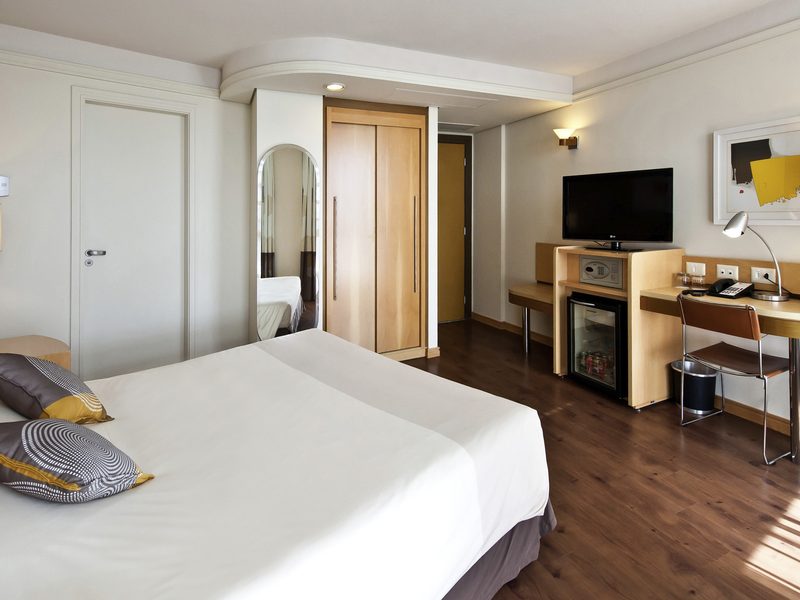
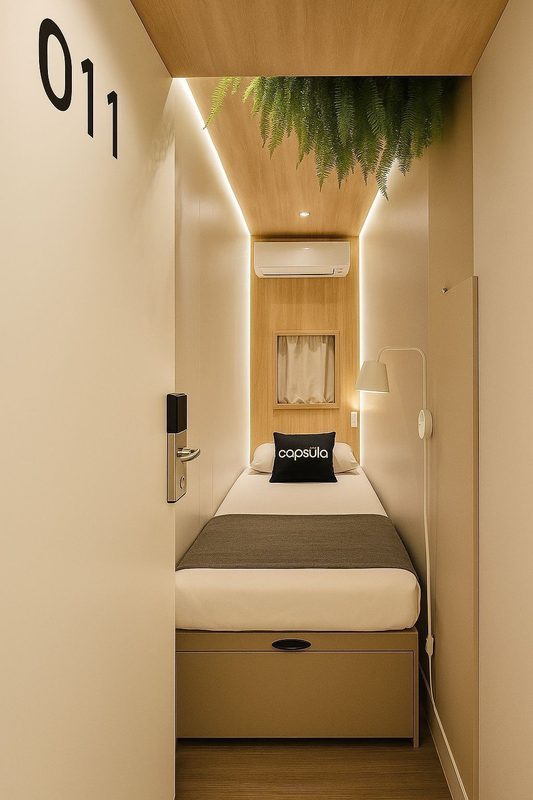
Hand-picked hotels across price tiers for September travellers.
Public Holidays in September
Dates that affect opening hours, transport and crowds
Dia da Independência
Known in English as Independence Day. Observed nationwide as a public holiday.
Dia da Independência
Known in English as Independence Day. Observed nationwide as a public holiday.
Dia da Independência
Known in English as Independence Day. Observed nationwide as a public holiday.
Packing Checklist
Bookmark this page — your progress is saved between visits
Need the full list with shopping links?
Climate-specific gear, brand recommendations, and what to leave at home.
View Brazil Packing List →Essential Tips
Insider knowledge and common pitfalls to avoid
Insider Knowledge
September's dry-season burns across the cerrado are not just a background nuisance. On bad days, Brasilia, Goiania, and towns near the Pantanal can record air quality readings that rival industrial cities. Locals track the INPE satellite fire maps. They check the CPTEC air-quality forecasts before planning outdoor days. If you are heading to Chapada dos Veadeiros or the Pantanal, check both the night before. Adjust your itinerary if smoke is forecast to settle. Moving your hike one day can mean the difference between a 40-kilometer (25-mile) vista and a gray wall at 2 kilometers (1.2 miles).
The Independence Day long weekend is one of three periods when Brazilians travel domestically in force. Domestic flights spike accordingly. If your dates overlap the first week of September, book internal flights at least a month out. Avoid connecting through Congonhas, Sao Paulo's city airport. It becomes a bottleneck of delays. Guarulhos handles the overflow better. The bus from Guarulhos to most Sao Paulo hotels is a reliable alternative to the famously unpredictable taxi queue.
Bonito's controlled-access model means every attraction has a fixed daily visitor cap. Your hotel or pousada reception typically handles the booking for you as a package. You do not call each site individually. This is not a scam. It is not an upsell. It is how the system works. Trying to book directly often means you miss the coordination that local operators handle automatically. Let them sequence your days. Schedule river visits for the morning. The light hits the water at the right angle for visibility then.
Brazilian churrascarias outside the tourist circuits serve a rodizio format where the waiter brings cuts to your table until you flip a card from green to red. The instinct is to load up on the first three passes. But the best cuts, the picanha cap and the costela, tend to come later in the rotation. Eat light at the salad bar. Skip the sausage and chicken hearts on the early passes, and wait. The picanha will arrive with a seared fat cap that crisps against your teeth while the center stays rare and iron-rich, and that is the cut that justifies the entire meal.
Avoid These Mistakes
Treating Brazil as a single climate zone. The country spans 4,300 kilometers (2,672 miles) from north to south, and September weather in Manaus, Salvador, Rio, and Porto Alegre might as well be four different countries. Travelers who pack for tropical heat and then shiver on the Santa Catarina coast, or who plan a full northeast beach week only to hit lingering rains, made the same error: they looked at a national average instead of checking the specific region. Build your packing list by destination. Never by country.
Skipping the Pantanal because it sounds remote and complicated. The northern Pantanal is a three-hour drive from Cuiaba, which has direct flights from Sao Paulo, Rio, and Brasilia. September access roads are dry and passable, unlike the January-March floods that do make parts of the wetland unreachable. The logistics are simpler than they look. The wildlife density rivals anything in East Africa at a fraction of the cost and none of the jet lag from European or North American gateways.
Flying into Rio or Sao Paulo and never leaving. Both are excellent cities, but September's real advantage is what it unlocks outside the urban centers: the Pantanal at its wildlife peak, the cerrado waterfalls before the rains, the whale coast in full calving season. Spending your entire September trip on Copacabana is like visiting France and never leaving the eighth arrondissement. Internal flights are short, often under two hours. September fares outside the Independence Day weekend tend to run well below the January peak.
Ready to plan your trip to Brazil?
Now that you've got the research covered, here's where to go next.
Explore More Activities in Brazil
Didn't see anything interesting yet?
Browse Viator's full catalog of tours, day trips, food experiences, and private guides in Brazil.
See All Brazil Tours on Viator